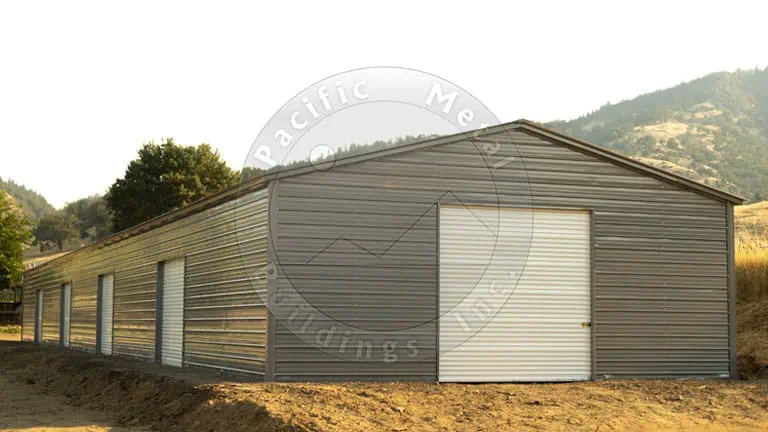
If you are a homeowner, farmer, or contractor in the United States, a steel building is not a small purchase. You expect it to protect your vehicles, equipment, animals, or inventory for decades. The warranty is the written promise that backs that expectation.
In this guide, we will walk through what steel building warranties usually cover, what they do not, how long metal buildings actually last, and how warranties work specifically with a dealer like Get Carports. Everything is written in plain language so newer buyers and seasoned pros can both follow along.
TL;DR – Key Takeaways
- A warranty is not insurance. It usually covers defects in materials and workmanship, not storm damage or accidents.
- Common warranties on quality steel buildings include rust through coverage on framing, paint and panel warranties, and a short term workmanship warranty.
- With Get Carports, qualifying 12 gauge framing and roofing carries a 20 year rust through warranty, plus coverage for certified wind and snow loads and a defined workmanship warranty period.
- Most warranties do not cover:
- Storms, floods, or “acts of God”
- Poor site prep, misuse, or lack of maintenance
- Corrosion caused by contact with soil, fertilizer, or standing water
- Thicker steel and engineered designs often qualify for stronger or longer structural and corrosion warranties.
- The smartest move is to read the actual warranty document, keep records of maintenance, and call your dealer early if something looks wrong.
Why Warranties Matter for Steel Buildings
A good steel building feels permanent. You pour the slab, set the structure, and plan to use it for decades. Warranties matter because they shift part of the risk away from you if something is wrong with the building itself.
For homeowners
If you put up a two-car garage or RV cover, you expect:
- Dry storage for vehicles and household items
- Stable doors that open cleanly
- Panels that do not peel or rust through early
If a roof panel rusts through after a few years due to a coating defect, that should not be your repair bill. A clear warranty is one way to make sure it is handled by the supplier rather than your savings.
For farmers and rural property owners
Barns, equipment sheds, and livestock shelters are business tools as much as buildings. A premature structural issue can:
- Interrupt feeding or shelter for animals
- Expose tractors and implements to weather
- Force emergency repairs in the middle of a busy season
When you are depending on that building every day, long term rust through coverage on the frame and properly engineered wind and snow designs are not “nice to have”. They are part of risk management.
For contractors and small businesses
If you are a contractor or business owner, warranty terms affect:
- Your liability on projects
- The number of callbacks you might face
- The confidence you have when proposing a building to a client
Being able to tell a customer that the frame and roof on a certified steel building are warranted for many years, and that install workmanship is backed for a defined period, is a real sales advantage.
How Long Will a Metal Building Last?
When buyers ask “How long will this metal building last?” they are really asking two things:
- How long the materials can last.
- How long the warranty will back those materials.
On the material side, properly manufactured and installed steel buildings have impressive life spans:
- Steel framing is often rated to last over 100 years under normal conditions.
- Galvanized steel roof and wall panels can last 40 to 80 years depending on coating, gauge, and environment.
- Fasteners are typically rated for several decades when matched to the panel system.
The warranty does not cover the full life span of the materials, but it does cover the “reasonable service life” for defects. For example, Get Carports offers:
- A 20 year rust through warranty on qualifying 12 gauge framing and roofing, assuming proper care and maintenance.
- A certified building warranty that backs specific wind and snow loads when you order an engineer-certified building and follow the plans.
In other words, if the building is designed right, installed correctly, and maintained, you can expect it to outlast the warranty by a wide margin. The warranty simply covers you if something was wrong in the way it was built or coated.
Types of Metal Building Warranties
Every manufacturer or dealer writes their warranty differently, but most steel building warranties fall into a familiar set of categories.
Quick comparison table
Here is a simple way to think about the main warranty types you will see:
| Warranty type | Typical term range* | What it usually covers | What it usually does not cover |
| Rust through (structural) | 10 to 25 years | Frame and sometimes roof where steel rusts all the way through | Surface rust, scratches, corrosion from soil or chemicals |
| Certified structural / loads | Up to 20 years | Ability to handle specific wind and snow loads per drawings | Damage from extreme events beyond design, poor foundations |
| Panel paint / finish | 10 to 40 years | Peeling, cracking, excessive chalking or fade, perforation | Normal fading, scratches, touch up paint, cut edges |
| Workmanship | 30 days to 1 year | Install issues like misaligned doors, leaks from poor flashing | Damage from unlevel slabs, later modifications, accidents |
| Accessories / components | Varies by item and brand | Doors, windows, openers, vents, insulation, etc | Misuse, lack of maintenance, abuse |
*Ranges shown here reflect common industry practice. Always read the written warranty for the exact terms for your building.
Now let us break each of these down.
Rust through warranty
A rust through warranty is about serious corrosion, not just cosmetic orange spots.
- “Rust through” means corrosion has eaten all the way through the steel, to the point that the structural member or panel is perforated and weakened.
- Surface rust from scratches, chips, or trapped debris usually does not qualify. That is considered maintenance.
With Get Carports:
- 12 gauge and 12 gauge certified buildings, which may include some 14 gauge elements, are backed by a 20 year rust through warranty on framing and roofing, assuming normal care and maintenance.
- The warranty does not cover horizontal roofs over certain lengths, and it assumes you keep the building clean and dry at contact points.
Common things that can void rust through coverage
Most providers, including Get Carports, exclude damage or premature rust caused by:
- Direct contact of framing with soil, fertilizer, manure, salt, or other corrosive materials
- Standing water or clogged gutters that hold moisture against steel components.
- Aggressive chemicals used for cleaning
- Intentional abuse or misuse of the building
If your building will sit near corrosive materials, talk to the dealer in advance about the right foundation and clearance.
Workmanship warranty
Workmanship warranties focus on how the building was installed, not the materials themselves.
They usually cover items like:
- Trim and sheeting cuts that were done incorrectly
- Improper installation of anchors, doors, and windows
- Obvious misalignment or fastening errors that cause leaks or performance issues
With Get Carports, installations are covered by a workmanship warranty that requires you to report defects within a set time after installation. The formal warranty page explains that workmanship issues must be reported within 365 days and describes what counts as a workmanship defect.
Many product pages also highlight a short, clearly defined workmanship period so buyers know to inspect their building soon after it goes up.
The practical lesson for you:
- Be present or available on install day if possible.
- Walk the building with the crew or soon after.
- Open and close every door, check for light showing at panel laps, and look for obvious issues.
- Report any concerns quickly so they fall inside the workmanship window.
Panel warranty
Panels are your building’s skin. Roof and wall sheets usually have two kinds of coverage:
- Paint and finish coverage
- Perforation (rust through) coverage
Typical panel warranties:
- Promise that the paint will not peel, crack, or chalk excessively for a set number of years.
- May offer longer or stronger coverage on thicker panels, such as 26 gauge compared to 29 gauge, when they use the same paint system.
What panel warranties usually exclude:
- Normal fading from sun exposure
- Scratches or dents from hail, tree limbs, or equipment
- Field cut edges that were not properly sealed
- Panels that were never washed or kept clear of leaves and debris
Even the best panel warranty still assumes you will rinse the building occasionally and keep gutters and valleys clean.
Accessories and components
Doors, windows, openers, vents, cupolas, and insulation are often covered by separate warranties from their own manufacturers.
Common patterns:
- Roll up and sectional doors may have specific coverage on springs, hardware, or paint.
- Windows usually carry warranties for glass seal failure and hardware.
- Electrical components like door openers or fans follow their own terms.
Your dealer may help you submit a claim for these parts, but their main building warranty may not control these components. Always keep the paperwork that comes with accessory items.
Common Metal Building Warranty Myths
There is a lot of confusion around what building warranties really do. Let us clear up some of the biggest myths.
Myth 1: “If it has a long warranty, it must be the best building.”
Reality:
Years on paper do not tell the whole story.
A 40 year paint warranty that is heavily prorated may offer less real value than a shorter non prorated term.
What matters is what the warranty promises to do in specific situations and how easy the company is to work with.
Focus on:
Whether rust through coverage is full replacement or prorated
Whether structural loads are clearly stated and backed by engineer drawings
How claims are actually handled in practice
Myth 2: “The warranty will cover any rust, anywhere.”
Reality:
- Most warranties only cover rust through, where the steel is perforated. Light surface rust from a scratch or neglected area is usually a maintenance issue.
- Corrosion that comes from direct contact with dirt, fertilizer, or standing water is almost always excluded.
To stay covered:
- Keep framing off the ground and away from corrosive materials.
- Wash off road salt or manure if your building is on a farm or near winter roads.
Myth 3: “Storm damage is a warranty problem, not insurance.”
Reality:
- Windstorms, tornadoes, hurricanes, hail, and earthquakes are insurance events, not warranty events.
- A structural warranty says the building was designed and built to meet certain loads. It does not act like an insurance policy for extreme weather.
You still need:
- Property insurance or farm insurance that covers wind, hail, and other regional risks.
- Installation that follows the engineering, including the right anchors and slab design.
Myth 4: “If I use my own installer, the warranty will be the same.”
Reality:
- Many warranties are written with the expectation that approved crews install the building.
- If you use a third party installer or do it yourself without following the drawings, some or all warranty coverage can be reduced or voided.
With Get Carports, using the professional install service also means your building falls under their workmanship terms instead of leaving you on your own if something is off.
Myth 5: “Steel buildings are maintenance free, so I do not have to do anything.”
Reality:
Steel is low maintenance, but not maintenance free. Your warranty assumes you will:
- Keep the roof and gutters clear of leaves and debris.
- Inspect fasteners and touch up any bare metal cuts as needed.
- Avoid using harsh chemicals or corrosive cleaning products on panels or frame.
Simple seasonal checks go a long way toward keeping your building and its warranty in good shape.
Myth 6: “Modifications will not affect my coverage.”
Reality:
Cutting new openings, welding extra steel in place, attaching other structures, or significantly loading the frame in ways that were never engineered can all affect your warranty.
Most written warranties clearly say that:
- Alterations, abuse, or misuse of the unit can void coverage.
If you plan to modify a building, call your dealer first and ask how to do it without harming the warranty.
Conclusion
Steel building warranties are not just fine print. They are a real part of the value you get when you invest in a garage, barn, or commercial building.
If you remember nothing else, keep these points in mind:
- Look past the number of years and read what is actually covered.
- Understand the differences between rust through, paint and panel, structural, and workmanship coverage.
- Keep up with basic maintenance so your building and your warranty both stay strong.
- Ask questions before you buy, and keep your documents somewhere safe.
When you work with Get Carports, you get a metal building backed by clear rust through and workmanship warranties, certified load options, and written exclusions and limits that you can review before you sign.
Ready to take the next step?
- Explore building options and pricing on GetCarports.com.
- Use the online 3D designer to customize your own garage, barn, or commercial building.
- Or call the Get Carports team to talk through your site, loads, and warranty questions before you order.
The right building plus the right warranty means you can put it up, use it every day, and sleep well knowing it is backed on paper as well as in steel.