Category Archives: Steel Buildings

why-spring-is-the-best-time-to-install-a-metal-building-in-california

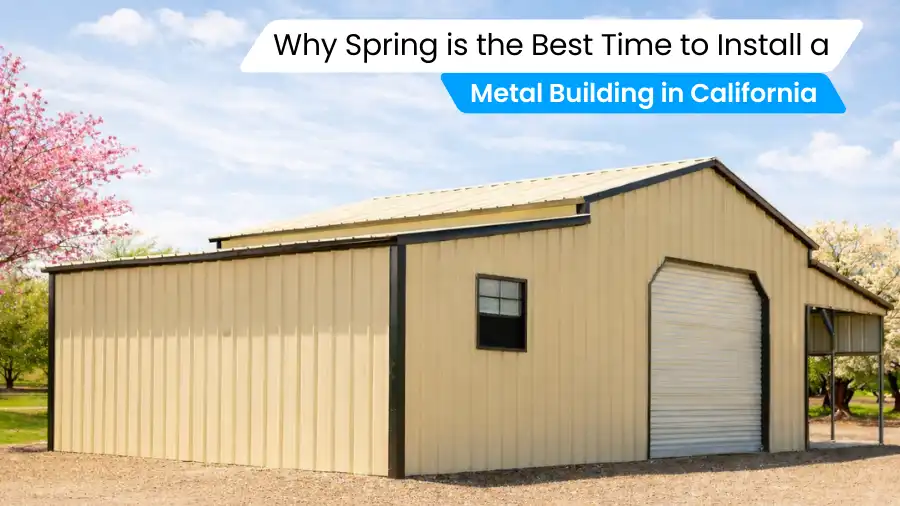
Why Spring is the Best Time to Install a Metal Building

Metal buildings don’t have a strict season. Crews install them in January, August, whenever a project lines up. Still, timing matters more than people think. For metal building projects in California, spring often turns out to be the easiest window for getting a project moving. The weather settles down, contractors start lining up jobs again, and many property owners finally pull the trigger on plans they’ve been sitting on.

Key Highlights

  • Spring tends to bring steadier construction weather across much of California
  • Moderate temperatures make outdoor work easier for installation crews
  • Fewer winter storms mean fewer unexpected delays
  • Soil conditions are often easier to prepare for foundations
  • Contractors may have more schedule flexibility before summer
  • Spring installations avoid peak summer heat on job sites
  • Permit offices sometimes process applications faster, early in the season
  • Buildings completed in the spring are ready to use for the rest of the year

Spring Weather Makes Installation Easier

When it comes to construction projects, weather runs the show. If it rains for two days straight, work stops. If temperatures spike, progress slows down. Spring in California usually avoids both of those extremes, which is why many contractors quietly prefer it.

Moderate temperatures

Spring typically brings comfortable daytime temperatures. Crews can work without fighting freezing mornings or brutal afternoon heat.

Safer working environment

Extreme weather adds stress to any job site. When temperatures stay manageable, workers are less likely to deal with fatigue or heat-related issues.

Better productivity

When the weather cooperates, crews can focus on the actual build.

Reduced risk of weather delays

Winter storms sometimes shut down construction for several days at a time. Spring weather tends to be more predictable.

More consistent construction schedules

Contractors build their schedules around expected weather patterns. Spring often provides enough stability to keep projects running close to the original timeline.

Helps avoid extreme heat

Starting a project in spring often means the majority of installation finishes before high temperatures show up.

Spring Provides Better Ground Conditions

A steel structure might be the most visible part of a metal building, but the ground underneath it is just as important. Before anything gets installed, the site has to be prepared. Spring weather allows for:

Stronger foundation setup

After winter rain tapers off, soil usually becomes more stable. Contractors can prepare the base without dealing with overly saturated ground.

Better compaction and leveling

Soil that’s extremely dry can be difficult to compact properly. On the other hand, soil that’s soaked can shift or settle unevenly. Spring often lands somewhere in between, which helps crews prepare the site more effectively.

Spring Season Helps Construction Go Smoother

Scheduling, permits, and contractor availability all play a big role in the construction process. Spring tends to be a time when many construction projects begin moving forward.

Quicker scheduling

Early in the season, some contractors still have open time on their calendars. Waiting until midsummer often means competing with a much larger number of projects.

Potentially faster permitting

Local permitting offices sometimes get backed up once construction demand increases.

Preparing Your Property for Spring Installations

Before construction starts, the building site should be ready. Proper preparation helps crews begin work immediately once materials arrive.

Steps that help prepare your property include:

Clear and grade the land

Remove debris from the installation area. Grading the surface guarantees the foundation sits on level ground.

Install adequate drainage

Water should move away from the building site rather than collecting around it. Good drainage helps protect the foundation and surrounding soil.

Hire foundation contractors

A metal building depends on a strong base. Experienced contractors can install a proper slab required for the structure.

Secure permits

Most local jurisdictions require building permits before construction begins. Handling this step early helps prevent delays later.

Why Metal Buildings Are Ideal for California Properties?

Metal buildings are common across California, and for good reason. These structures are:

Useful for a wide range of projects

Metal structures are used for garages, workshops, barns, equipment storage, and commercial spaces. Their design can be adapted for many uses.

Metal buildings last for decades in California’s weather

Steel construction is known for long-term durability. With proper installation and maintenance, many buildings remain functional for decades.

Metal buildings are engineered for seismic activity

Many modern steel building systems are designed with earthquake resistance in mind. This helps them perform safely in seismic-heavy regions.

Plan Your Spring Metal Building Project with Pacific Metal Buildings

Pacific Metal Buildings has worked with customers throughout California on projects ranging from simple storage structures to larger workshops and agricultural buildings. Our buildings are built with high-quality steel framing and are customizable from top to bottom.

When you work with Pacific Metal Buildings, you receive:

  • Buildings certified for local conditions
  • Warranty-backed structures
  • Dedicated customer support
  • Included delivery and installation

Call us today at +1 (530) 438-2777 to start designing your custom metal building with the help of our experts.

Spring is the Perfect Season for Metal Buildings

Starting a construction project at the right time can make a noticeable difference. In California, spring often provides a comfortable window for installing a metal building.

Weather conditions are usually manageable, soil preparation is easier, and contractors are gearing up for the building season. For many property owners, that combination makes spring a practical time to begin.

Frequently Asked Questions

Can metal buildings be installed in winter?

Yes, they can. Weather conditions may occasionally slow progress, but installation is still possible.

How long does it take to install a metal building?

Installation time varies depending on the building size and site preparation requirements.

Do metal buildings require foundations?

Most metal structures rely on concrete slabs or engineered foundations for stability.

Are metal buildings suitable for residential properties?

Yes. Many homeowners use them for garages, RV storage, and workshops.

How long do metal buildings last?

With proper installation and maintenance, steel buildings can last for decades.

Do I need permits before installation?

In most locations, building permits must be approved before construction begins.
Oregon-Snaow-Load-Guides

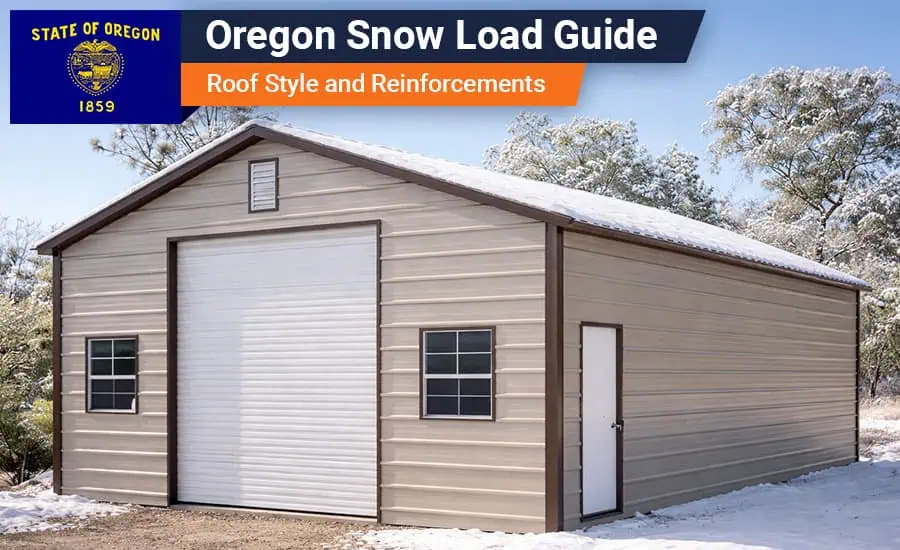
Oregon Snow Load Guide: Roof Style and Reinforcements


Snow load is the weight of snow put on your roof. That weight changes with how much snow falls—and how wet it is. Oregon makes this tricky because conditions can flip fast. Near the coast, snow is often slushy and heavy. Up in the mountains, it can stack up deep and hang around. In Central and Eastern Oregon, storms can be colder and drier, but repeated events still accumulate significant roof load over time.

Do you know that Oregon snow loads are site-specific? Many jurisdictions apply a minimum uniform roof snow load of 20 psf, and some areas also require a 5 psf rain-on-snow surcharge when the roof/drainage conditions trigger it. Your exact requirement depends on your address, elevation, roof slope, roof shape, and local enforcement.

Roof design plays a big role in how a building handles snow. Some roofs shed better. Some hold snow longer. Pitch, panel direction, framing, and drift-prone roof shapes are where the real differences show up.

What to know before you pick a roof style

Snow rules exist for one reason: to prevent roofs from becoming overloaded during long winters and sudden storms. If you understand how snow behaves on a roof, your design decisions get a lot easier.

  • Snow load vs. roof load
    Dead load is the weight of the permanent roof system (framing, panels, and other fixed materials). Snow load is the snow sitting on top of it. Roof design accounts for the roof system and environmental loads (snow, wind, and, in some cases, rain-on-snow effects depending on roof and drainage conditions). Snow is the one that catches people off guard because it doesn’t always show up evenly.
  • Why does wet snow hit harder
    Wet snow carries more water and less air. That means you can get a big weight spike from a storm that “doesn’t look like much.” Oregon sees this often in the milder zones.
  • Why slope changes everything
    More slope usually means snow sheds sooner. Lower-slope roofs tend to retain snow longer, increasing the duration the structure must carry that load.
  • Why doesn’t the snow load evenly
    Roofs don’t always carry snow like a perfectly even blanket. Wind and roof shape create drift piles—high spots that can affect the design even when overall snowfall appears average.

How to figure out your local snow load

Snow load isn’t something you want to eyeball. Oregon requirements are tied to location and elevation, and the details change from one area to another. Here’s how we usually do it so it doesn’t turn into plan-check surprises later:

  1. Start with site-based criteria for your address
    Two common starting points in Oregon are the Oregon Design Criteria Hub and the SEAO snow load lookup. They help you establish a baseline tied to your address and elevation, rather than guessing based on a general region.
  2. Call your county building department
    They’ll confirm what they enforce locally and what they expect to see in plan review. This is where you’ll learn whether they apply the 20 psf minimum, when they require rain-on-snow checks, and what documentation they want on the plans.
  3. Flag drift-prone roof features before plans are drawn
    Stepped roofs, lean-tos, valleys, parapets, and tall walls next to lower roofs are common drift traps. If you don’t call these out early, you end up redesigning later.
  4. Make sure the design is engineered for the loads
    In Oregon, the design approach is based on the Oregon Structural Specialty Code (OSSC) and standard load methods (commonly handled through ASCE 7 loading procedures). Your engineer converts local criteria into a roof design that accounts for slope, exposure, drift zones, and the connections that tie the roof system together.
  5. Submit plans and build to what gets approved
    Plan review helps reduce corrections and delays, but the job still has to match the approved drawings and pass inspections.

Permit-ready plan checklist (what reviewers usually want to see)

  • Site plan showing building location, property lines, and setbacks
  • Roof plan showing slope and any roof features (lean-tos, steps, valleys, parapets)
  • Snow load design notes (including drift zones where roof heights change)
  • Framing and connection details tied to the stated loads
  • Foundation/anchorage details that match the building system

Roof choices that actually matter in snow

If snow is a real concern where you are, roof style isn’t just an appearance choice. It changes how snow sheds, where it sticks, and where it piles up.

  • Roof pitch
    Steeper pitches usually shed snow more easily because snow has less reason to linger. Shallow pitches tend to hold it longer, which increases sustained loading.
  • Panel direction
    Vertical panels often shed snow and water more reliably because the ribs run from ridge to eave. That can help reduce “hang time,” but it doesn’t eliminate drift problems if the roof shape creates drift zones.
  • Drift zones (this is where designs get tested)
    Wind can push snow into uneven piles—especially at roof edges, roof steps, lean-to connections, and tall-to-low transitions. Those drift zones are why the roof shape and layout need to be part of the engineered plan, not an afterthought.

Roof style comparison for Oregon snow

Different roof styles have different snow-shedding tendencies and common upgrade needs. Use this as a practical comparison—not a promise.

Important note: Any roof style can be engineered to meet the required snow loads. This chart reflects typical snow behavior and the areas that typically require reinforcement when snowfall is heavy.

Roof StyleStrengthSnow Handling TendencyBest forBudget
Regular RoofsVaries by engineered ratingOften fine in milder areas; may need upgrades where snow stacks or driftsModerate climatesLowest priced roofing type
Boxed Eave RoofsVaries by engineered ratingSolid middle option; still needs the right snow-load rating in higher snow areasMixed climatesMid-tier
VerticalVaries by engineered ratingOften chosen where shedding matters most; commonly used in heavier snow/wind areasAny climate (when engineered to site loads)Most expensive option

Reinforcements that matter in snowy areas

Roof style helps, but it’s not the whole story. In many parts of Oregon, reinforcements are what separate a roof that “should be fine” from one that’s actually built for the conditions.

  • Upgraded framing package
    This isn’t about chasing a single gauge number. The real upgrade is the engineered framing and spacing package—primary frames, secondary framing, spacing, and the connection details that tie it together.
  • Additional bracing
    Bracing distributes the load through the structure rather than concentrating it in one spot.
  • Truss/rafter spacing changes
    Closer spacing or upgraded layouts provide better support for sustained accumulation.
  • Upgraded anchors and connections
    Connections are where systems fail under extreme loads. Stronger anchorage, correct attachment details, and proper installation help ensure the building behaves as a single system under load.
  • Site-rated design package
    A site-rated package documents that the building is engineered for your local snow and wind requirements and is typically easier to permit because the design intent is clear in the plan set.

Why drift causes failures
Drift is a big deal because it doesn’t load the roof evenly. Roof steps, lean-tos, parapets, valleys, and tall-to-low transitions create collection points. If those areas aren’t designed for it, parts of the roof can be overloaded even when the winter feels “normal.”

How snow load shifts across Oregon

Snow loads in Oregon change with geography and elevation. Places a few hours apart can land in very different snow criteria, especially as you move toward or into the Cascades. The safest approach is always to use site-based criteria plus whatever your local building department requires.

  • Coastal areas
    Snowfall is usually light, but it can be wet and heavy when it does occur.
  • Higher elevations
    Mountain areas see deeper snow and longer accumulation periods, which typically demand higher-rated designs.
  • Central and Eastern Oregon
    Cold weather and dry snow can still build heavy roof loads after repeated storms, especially when snow doesn’t melt between events.

Snow load mistakes that cost people time and money

Most snow problems aren’t caused by “record storms.” They come from planning gaps.

  • Choosing a roof style based only on price
  • Ignoring drift zones created by wind and roof geometry
  • Skipping plan-review questions until after ordering
  • Underestimating wet snow events
  • Not planning where the shed snow will land near doors and walkways
  • Putting man doors or walkways directly under the roof edges, where snow piles up and turns icy

Pacific Metal Buildings and snow-ready designs in Oregon

At Pacific Metal Buildings, we help you choose roof styles, reinforcements, and engineered designs that match your location. From confirming local snow criteria to preparing permit-ready plans, our team helps you build a package that fits your county’s permitting process.

With us, you get:

  • Metal buildings rated for your region’s weather
  • Local knowledge of building requirements
  • Warranty and manufacturer coverage details based on your building package
  • Included delivery and installation
  • Dedicated customer service from start to finish

If you’re planning a metal building in Oregon, call Pacific Metal Buildings at +1 (530) 438-2777. We’ll walk you through the design process, answer your questions, and help you build something that’s ready for Oregon winters.

FAQs about Oregon metal building snow loads

1 What are Oregon snow load requirements?
They’re location-specific requirements that define how much snow weight a roof must safely support. Many jurisdictions apply a 20 psf minimum roof snow load, and some require additional checks for rain-on-snow conditions depending on roof and drainage details.

2 How do I calculate snow load for my address?
Start with site-based criteria tied to your address and elevation (many people use the Oregon Design Criteria Hub and/or SEAO lookup as a starting point), then confirm local enforcement details with your county building department, especially if your roof shape creates drift zones.

3 What roof style is best for heavy snow?
Vertical roofing and steeper pitches often shed snow more reliably, but drifting can still happen. The best roof is the one engineered for your site’s snow and drift conditions.

4 Which reinforcements matter most?
Framing package, spacing, bracing, and connection/anchorage details usually move the needle the most.

5 Do wider buildings need higher ratings?
Wider spans may require stronger designs to safely support snow loads, depending on the framing system and local requirements.

6 What does “engineered roof loads” mean?
It means the roof system is designed using engineering calculations to meet the environmental loads applicable to your site.

7 Can a drifting load be one side of the roof more than the other?
Yes. Wind and roof geometry can create uneven snow buildup, especially near edges and roof height transitions.

8 What should I ask my permit office?
Ask what snow load criteria they enforce for your address, whether they apply the 20 psf minimum, when rain-on-snow applies, and how drift zones should be shown in the plan set.