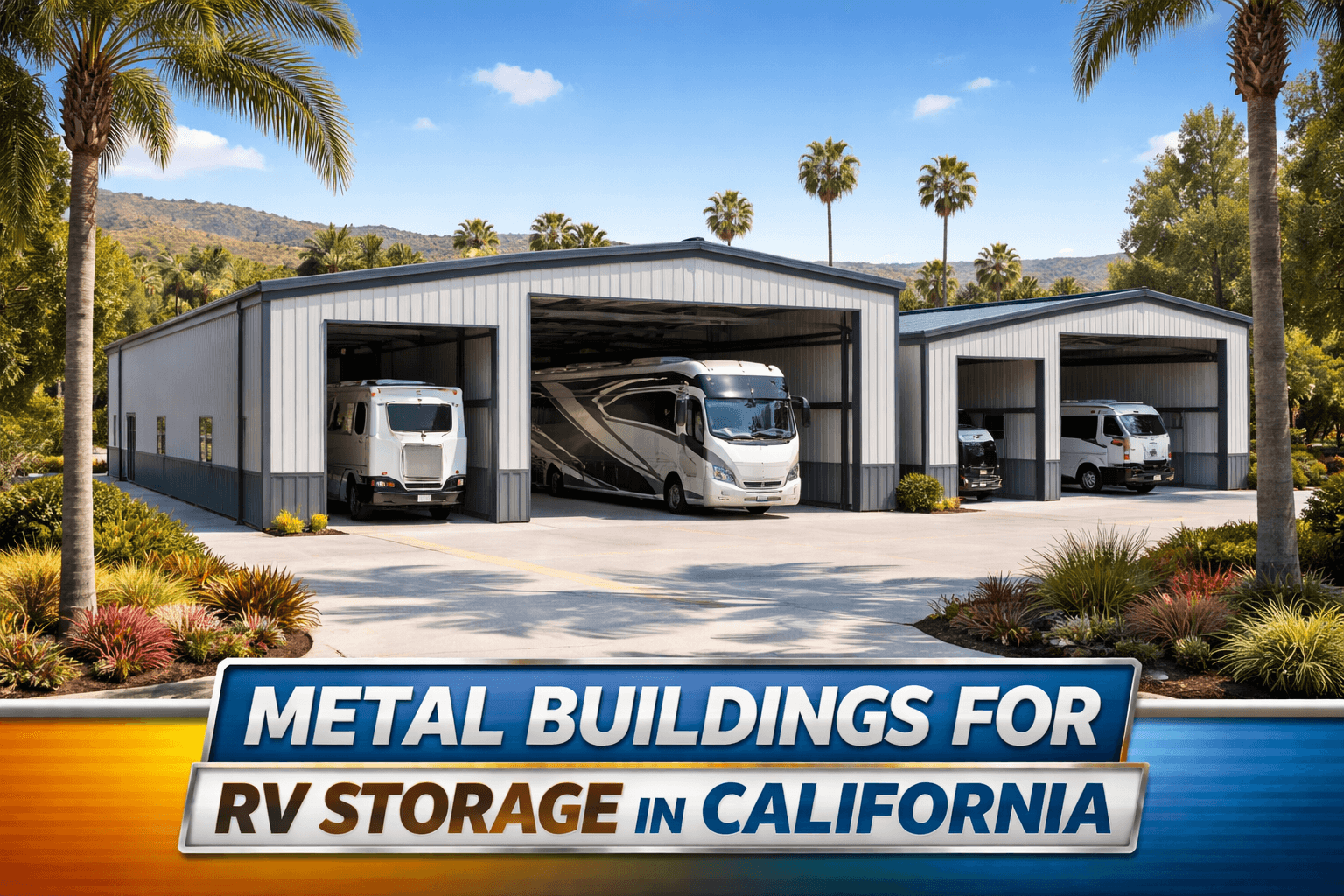
With RVs, you’re dealing with a vehicle that’s potentially longer than your driveway, taller than your garage door, and far too expensive to leave baking in the sun all year. And though it’s often an afterthought, finding the right place to protect it will play a big part in how long your vehicle lasts.
Across California, metal buildings have become the practical answer to this problem. They can be built tall enough for modern RVs, wide enough to move around inside, and flexible enough to fit properties that weren’t designed with RVs in mind.
If you’re searching for a way to keep your recreational vehicles protected from the harsh CA sun, but don’t know where to start, this guide can help. We’ll walk you through some of the common size options, how much you can expect to pay, and how to choose the right one for your RV project.
How to Pick the Right Size Metal Building for Your RV
Picking the best metal RV building doesn’t have to be a complicated process. A few measurements here and there will tell you what you need to know about the best option for you:
- Measure what you actually own, not what the brochure says
Slide-outs, ladders, roof units, antennas, and rear storage racks rarely show up in official specs. Walk around your RV with a tape measure and include anything that sticks out or sits on top.
- Give yourself more height than you think you need
Pulling into a building shouldn’t feel stressful. Extra interior height makes entry easier and leaves room for rooftop equipment. Door openings should also allow some margin, not just a perfect fit.
- Think beyond parking
Will you want to open compartments? Walk along the sides? Store gear inside? A few extra feet of width turns your building into usable space instead of a tight storage box.
Recommended RV Metal Building Sizes
RV metal buildings come in a wide variety of sizes and configurations. Whether you own a smaller camper or a larger motorhome, there’s something for every traveler. A few of our recommended sizes include:
| Building Size | Square Footage | Estimated Cost | Best Application |
| 18×40 RV Metal Building | 720 sq. ft. | $7,900 – $14,400 | Camper vans, smaller trailers |
| 20×45 RV Metal Building | 900 sq. ft. | $9,900 – $18,000 | Class C and mid-size RVs |
| 24×50 RV Metal Building | 1,200 sq. ft. | $13,200 – $24,000 | Large Class A motorhomes |
| 30×50 RV Metal Building | 1,500 sq. ft. | $16,500 – $30,000 | RV with side clearance |
| 30×60 RV Metal Building | 1,800 sq. ft. | $19,800 – $36,000 | RV plus storage or workspace |
Note: Estimated base-structure ranges (not including slab, grading, permits, engineering, electrical, or interior build-out)
Budgeting for a Metal RV Building in California
The price for metal RV buildings range between $11 and $20 per square foot for a base model. This cost fluctuates based on several factors, including structure size, reinforcements, number of doors and windows, add-ons, accessories, and more. Additionally, site prep, foundation installation, and permitting will also add to the final metal building cost.
As such, it’s difficult to narrow down a specific price. But by working with a trusted metal building provider like Pacific Metal Buildings, you can customize your structure and lock in a preferred price.
Permits in California and Planning Basics for RV Metal Buildings
Permits aren’t exciting, but they are necessary. In California, most RV metal buildings will need official approval of some kind. Keep in mind:
- The 120 square foot rule
Structures under 120 square feet may not require full permits. RV buildings almost always exceed that size, which means permits are typically required.
- Setbacks and layout rules vary by location
Local zoning will play a part in how close you can build to property lines. You’ll want to confirm with your building officials for specific information.
- Engineered drawings are usually required
Many jurisdictions ask for drawings that account for seismic activity, wind, and snow loads. Having these prepared correctly helps avoid delays.
California-Specific Upgrades That Are Worth Considering
California isn’t a singular environment, and what works in one county may not make sense in another. However, a few targeted upgrades can make a noticeable difference depending on where you live:
- Corrosion resistance for coastal properties
Protective coatings and upgraded fasteners help reduce the potential for rust and extend the life of structures near the coast.
- Extra reinforcement in snow regions
In higher CA elevations, snow accumulation is a real concern for structures that are unprepared. Reinforced framing and proper roof design help manage the weight of snow on your structure.
- Ventilation and insulation for heat control
Ventilation and proper insulation help regulate interior temperatures, which can make your RV building more comfortable and cause less heat stress on your vehicle.
Pacific Metal Buildings Is Your Partner for High-Quality RV Metal Buildings
With years of industry experience and a proven track record, Pacific Metal Buildings is proud to be top choice for high-quality RV sheds and Metal Buildings in California. Our structures are made with premium steel components, certified engineering, and attention to detail that shows in every project we take on.
With us by your side, you get:
- RV metal buildings sized around your actual vehicle
- Engineered plans designed for California requirements
- Materials selected for long-term durability
- Guidance through permits and planning basics
- Optional upgrades based on location and use
If you want to protect your RV through all seasons, but don’t know where to start, Pacific Metal Buildings can help you plan it from the ground up. Call us today at +1 (530) 438-2777 for more information, and let’s design your custom structure together.
FAQs
RV owners tend to ask the same questions once they start planning their RV building project. To help you save time and frustration, we’ve gone ahead and answered some of the questions we see the most:
Yes. Most RV metal buildings will require building permits, so you’ll want to check with your local building officials to find out which permits you’ll need.
Many Class A RVs need at least 14 to 16 feet of interior clearance.
Yes. Open-sided or partially enclosed designs are common and can improve airflow while still providing protection.
In most cases, installation often takes anywhere from a few days to a couple of weeks.
For many owners, yes. Going slightly bigger now is usually easier and cheaper than modifying the building later.